Brian and Kaylee’s fake engagement
Cinder & EllaBrian Oliver and Kaylee Summers’s fake engagement is a publicity arrangement that makes romantic intimacy part of a film campaign—and then becomes a means of coercion. Conceived to present Brian as a maturing romantic lead and generate attention for The Druid Prince, the staged relationship blurs the boundary between performance and private life until Brian’s recognition of Ella makes him choose to end it, whatever the professional cost.
Origins and Publicity Logic
The proposal emerges while Brian’s representatives are discussing his career after The Druid Prince. Lisa explains that the film’s success could lead the studio to approve the other four installments in The Ash Chronicles, with another screenplay already in progress and Brian expected back before the cameras in spring. Against that long career horizon, someone raises the possibility of an engagement as a way to reshape his image: the public could see Brian as grown-up, serious, and past the conduct associated with his earlier reputation.
The plan is sold in explicitly commercial terms. Lisa argues that presenting Brian and Kaylee as a real couple would bring millions in additional publicity without added cost, please teenage fans, and benefit both the film and Brian’s career. Brian objects to the prospect of a genuine romance, distinguishing the proposed performance from actual feeling; the gap between what the campaign claims and what the participants want is present from the beginning.
The scheme is not simply a public label imposed on an otherwise neutral pair. Kaylee and Brian have previously slept together after meeting on set, but Brian understood the encounter as a one-time way to relieve pressure, not the start of a relationship. He says that he spent weeks trying to make this clear and dated other women in front of her before she accepted that he wanted nothing more. Their earlier mismatch becomes the unstable private history on which the publicity story is built.
The Performance in Public
Their first highly visible date takes place at the Ivy, one of Los Angeles’s best-known celebrity venues. Photographers are already stationed outside, and the flashes begin before Brian’s car reaches the entrance because the paparazzi recognize it. Kaylee has chosen a setting where their appearance together will be immediately legible as a public event. Brian, by contrast, is uneasy: he describes the evening as their first supposed date and thinks of the arrangement as a farce.
The engagement subsequently acquires a public reality that neither participant can control on equal terms. When Brian tries to end it, Kaylee points out that everyone believes they are together and invokes the publicity, their careers, and their original plan to demonstrate that he is not merely an arrogant playboy. She argues that they could capitalize on the public’s investment in them, even imagining them as a Hollywood power couple. The staged romance has become valuable to Kaylee not only as publicity but as a continuing route to status and influence.
Coercion and the Break
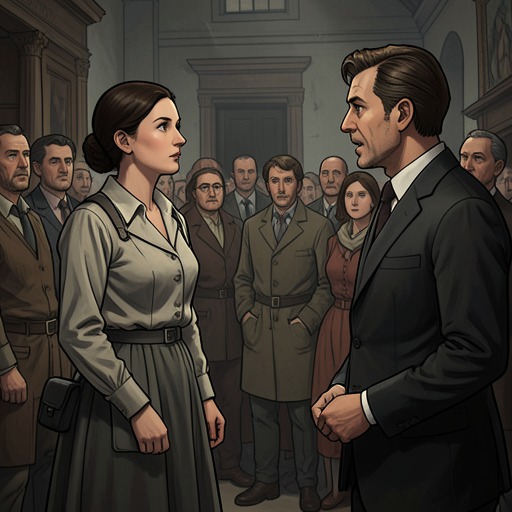
The arrangement’s defining turn comes after Brian recognizes Ella. In the hotel suite, Kaylee challenges his behavior at the event and treats the supposed relationship as an obligation: if he is publicly presented as in love with her, she insists, he should not flirt with anyone else. Brian answers that the publicity performance is over. His decision, he says, was made the moment he recognized Ella, and the certainty brings him calm rather than hesitation.
Brian gives Kaylee control over how the breakup will be presented—she can say that she ended things, or that he did—but insists that it is finished. When she disparages Ella, he warns Kaylee not to speak about her that way and threatens to reveal that the relationship was false from the start. He also names the alleged pressure behind the engagement: Kaylee threatened to damage his career, get his father dismissed from directing the Ash Chronicles sequels, and sabotage the film. His threat to expose the arrangement makes explicit that the publicity story had been sustained not by mutual commitment but, in his account, by blackmail.
Brian later tells Ella that Kaylee had already obtained a ring and staged a public scene as though he had proposed. Surrounded by reporters and people he needed to work with, he felt trapped; afterward, he says, Kaylee used threats to keep him participating. He had intended to wait until the major awards of the season were over before they publicly “split,” claiming that he wanted to keep Ella away from Kaylee and the surrounding turmoil. These explanations do not erase his decision to remain in the arrangement, but they disclose its coercive conditions and his delayed attempt to leave it.
Disclosure and Aftermath
Ella pieces together the arrangement when Brian’s continued absence and his engagement to Kaylee suddenly make sense to her as parts of a film publicity campaign. Brian confirms that he had not wanted the scheme, but had been vulnerable when people around him insisted that it would solve his problems and others stood to profit from it. His admission changes the meaning of the public engagement: what looked like evidence that he had chosen a new partner is revealed as an organized promotional device reinforced by threats.
By the time Brian speaks with Ella, he says he has already ended the engagement after the fan event. The media have not yet learned of the breakup, though Kaylee has understood that it is over. He anticipates that a relationship with an ordinary, unknown woman will provoke intense press attention, and recognizes that his management team will have to deal with the consequences. Ella’s concern is the reverse: she fears the publicity will hurt Brian’s career and expose her to a world of attention she does not want. The end of the fake engagement therefore does not end the conflict between private feeling and public storytelling.
That conflict becomes especially visible when Brian later disputes his team’s account of the kiss with Ella. He tells a journalist that the story about a charitable project is false: Ella is not a fan, he had not worked with a charity, and he was no longer engaged to Kaylee when he kissed Ella. He says Kaylee and members of his team invented the account at a meeting he did not attend and released it without his knowledge or consent, despite his assistant’s protests. The fake engagement thus leaves a second public fiction in its wake, one that frames Ella as part of a publicity stunt and requires Brian to challenge the narrative his own representatives helped construct.
Narrative Significance
The engagement turns romance into professional currency. A film campaign asks Brian to perform maturity through an apparent love story; publicity promises financial and career benefits, while Kaylee invokes the shared public image as a reason the performance must continue. Yet the private costs fall on the people inside the story: Brian describes threats to his work and family, and Ella fears the exposure and damage that celebrity attention could bring. Publicity is not merely a backdrop to their relationship but a force that determines what can be said about it and who gets to control the account.
The arrangement also gives the plot a sharp contrast between performed commitment and chosen attachment. The public engagement is supported by a ring, cameras, and a story designed for an audience, while Brian’s decision to end it is tied to recognizing Ella rather than to the campaign’s schedule. But even after he rejects the staged romance, the machinery of publicity continues to convert private events into marketable stories. The engagement ends as a relationship, yet its logic persists in the false account of how Brian and Ella met and why he kissed her.